
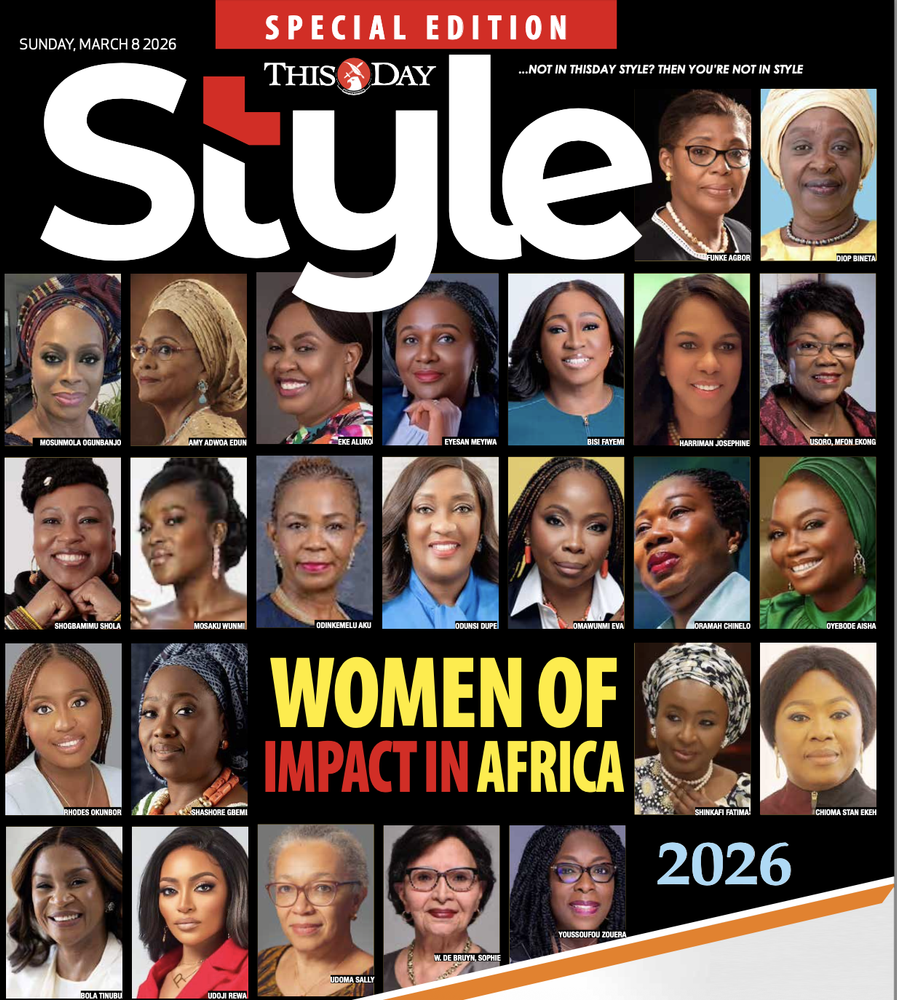
Every March 8th, the world pauses to acknowledge the undeniable force of women, their work, sacrifice, brilliance, and quiet, determined reshaping of societies. But in Africa, this moment lands differently. Here, womanhood has never been passive. It has always been an architecture of building, rebuilding, creating, healing, negotiating, transforming, and, above all, enduring. African women have held up communities long before their stories were ever recorded, let alone celebrated. And yet, recognition has often lagged behind contribution. The work has always been visible on the ground , in boardrooms, classrooms, laboratories, courtrooms, farms, start-ups, ministries, and homes but rarely assembled into one shared moment of acknowledgement. That is what makes this year distinct. In honour of International Women’s Month, ARISE News pays tribute to 100 Women of Impact in Africa. Visionaries whose contributions reflect the pulse of a continent in transition. Selected through audience nominations, editorial deliberations and focus-group insights drawn from across Africa and the diaspora, these honourees represent leadership that is not theoretical but lived, measurable and deeply felt. Their influence spans governance, business, entrepreneurship, technology, law, media, science, medicine, academia, philanthropy, and social innovation. They are the women shaping the African renaissance in a rapidly shifting world not by fitting into old definitions of power, but by redefining what power can look like.
Working on this issue came with a sense of pride, the kind that grows each time you look at the continent and realise just how much African women are accomplishing, often without the systems, resources, or allowances their peers elsewhere might take for granted. Yet, regardless of the obstacles, the progress is undeniable. African women are not just participating in national development; they are steering it.
Across the continent and in Nigeria, women run the majority of small and medium enterprises. They dominate the healthcare workforce. They are getting increasingly visible in governance, in technology, in academia, in the creative economy, and in the structures that hold countries together — policy drafting, institution-building, community organising, scientific research, and sustainable development. And the most interesting part? None of this is happening quietly anymore. The hesitation has disappeared. The shrinking has stopped. We are watching women step into leadership with clarity, authority, and competence, redefining what power looks like, what expertise feels like, and what progress requires. The ecosystem has not fully adjusted yet, but the momentum is no longer in question.
Which is why today’s Women of Impact 2026 event at the Eko Convention Centre feels particularly significant. As this issue is published, some of the most influential women on the continent will gather under one roof in Lagos to celebrate. The timing is intentional, not just to mark International Women’s Day, but to acknowledge the momentum African women are generating right now. Being in that room today will mean witnessing firsthand the scale of the work women are leading across sectors that determine the continent’s direction. While we celebrate these honourees, it’s important to say this clearly: you do not need to be on any list to recognise your own impact. If you are showing up in your home, your work, your community, your choices, your goals — your story is valid. Progress is not always public, and influence is not always loud.
Congratulations to the 2026 Women of Impact in Africa. And also congratulations to every other woman out there doing the work in ways the world may never fully see, but will always depend on.
Happy International Women’s Day.
UDOJI, REWA Finance Professional, Visual Artist, Chapel Hill Denham NIGERIA
Rewa Udoji brings together financial expertise and visual artistry in a career that bridges analysis and creative expression. As a senior professional at Chapel Hill Denham, she operates within Nigeria’s investment landscape with disciplined precision. Alongside finance, her work as a visual artist reflects thoughtful engagement with culture and identity. Udoji’s dual practice illustrates a modern African professional unafraid to inhabit both boardroom and studio.